Distributors and channel partners
Organizations serving residential, commercial, industrial, and landscape-lighting customers.
Through Ann Arbor SPARK’s Digital Summer Clinic, I supported APT Solar Solutions with product, market, systems, and data analysis for smart-city expansion and product-development planning. The job was to make complex technical, business, customer, and implementation information usable for decision-makers.
4 min read · Click-through presentations

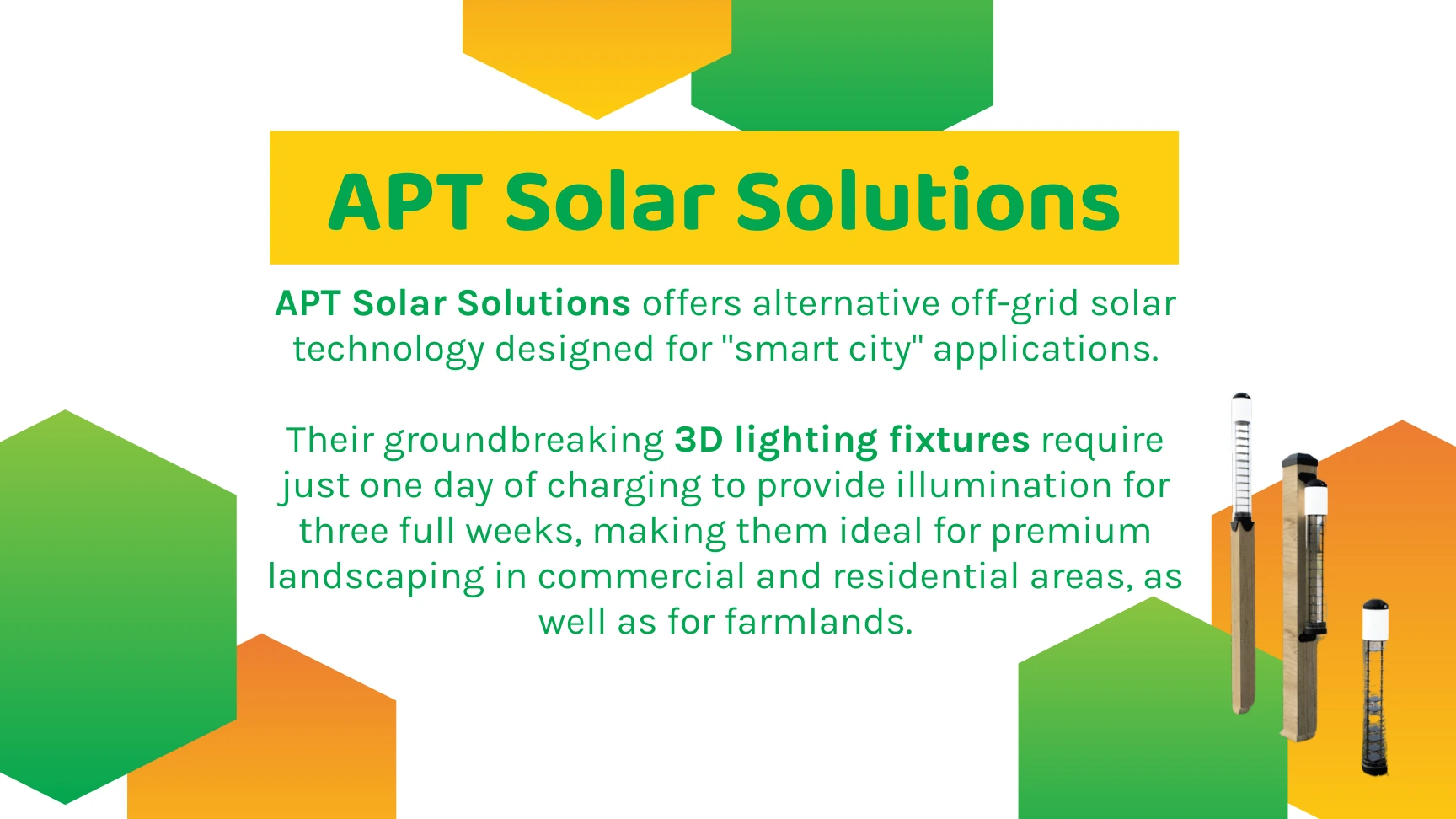
APT Solar Solutions develops off-grid solar lighting for smart-city applications, commercial and residential landscapes, and agricultural environments. During the summer 2024 engagement, the company was exploring how its technology could reach the U.S. market through suitable distributors and partners.
The business question went beyond whether solar lighting was a growing category. A distributor needed to serve the right customers, carry compatible products, and be willing to consider an outside manufacturer. Our research examined those conditions so leadership could distinguish an attractive market from a realistic route into it.
I worked on this ten-week engagement through Ann Arbor SPARK, partnering with Anna Withrow and communicating our findings to APT’s executives. My contribution combined customer and market research, competitor analysis, distributor outreach, synthesis, and the final recommendations.
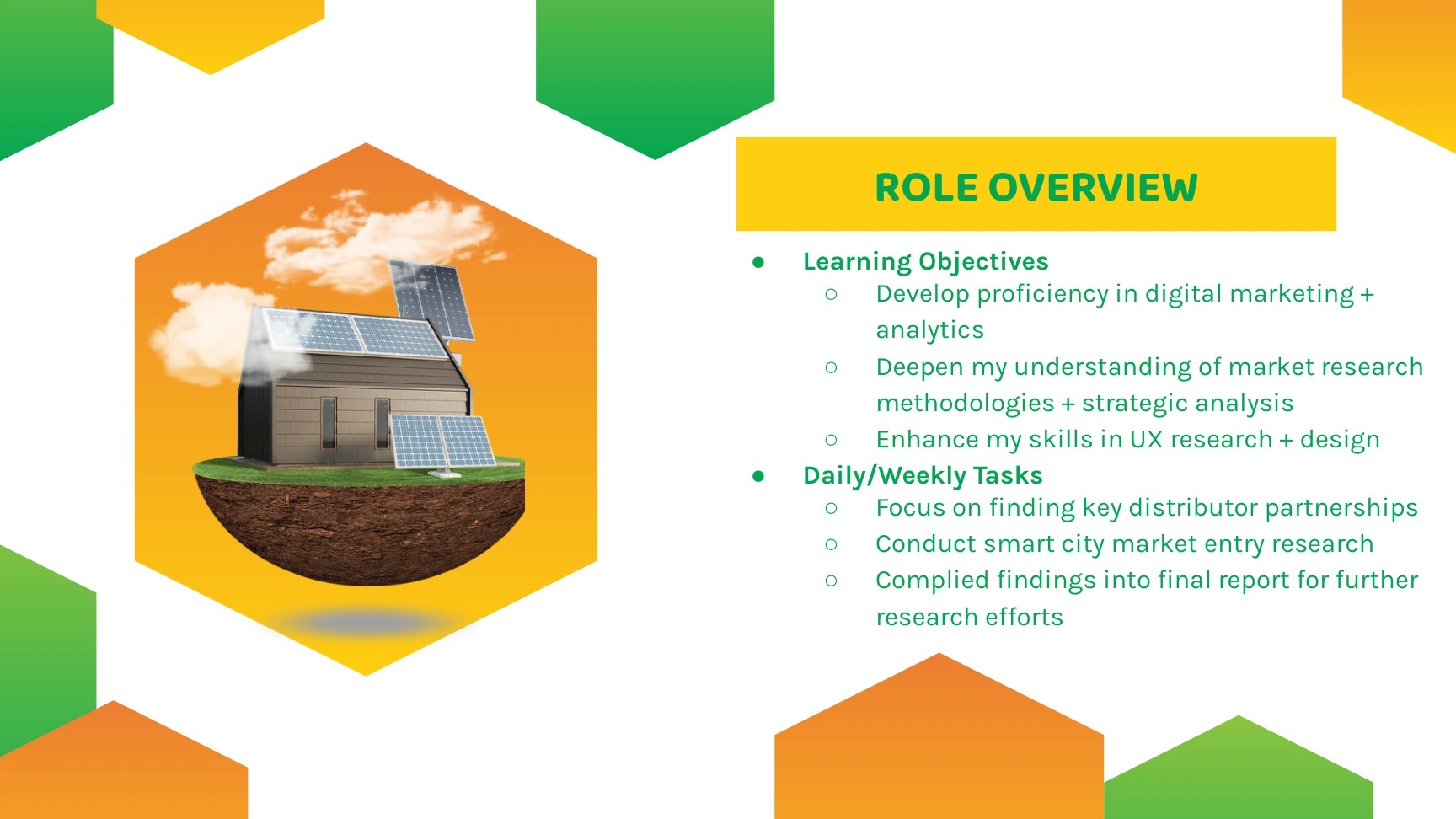
I helped turn a broad expansion objective into a research plan: identify relevant organizations, understand the customers they served, test their interest in the product, and document what leadership would need to do next. The research and final report were collaborative work; the slides distinguish my own contributions from my teammate’s updates.
A product’s technical promise does not automatically establish market fit. APT needed to understand which buyers valued off-grid lighting, what competing suppliers already offered, and what would make a distributor willing to carry a new product. Research also had to account for practical differences in fixture size, customer requirements, and distribution arrangements.
The immediate goal was to give leadership a usable prospect pipeline and a more specific expansion strategy. The project did not extend to closing distributor contracts or measuring revenue after launch.
Organizations serving residential, commercial, industrial, and landscape-lighting customers.
Executives deciding which prospects to pursue and where product development could improve fit.
Property owners, developers, agricultural businesses, and other buyers whose lighting needs influenced channel decisions.
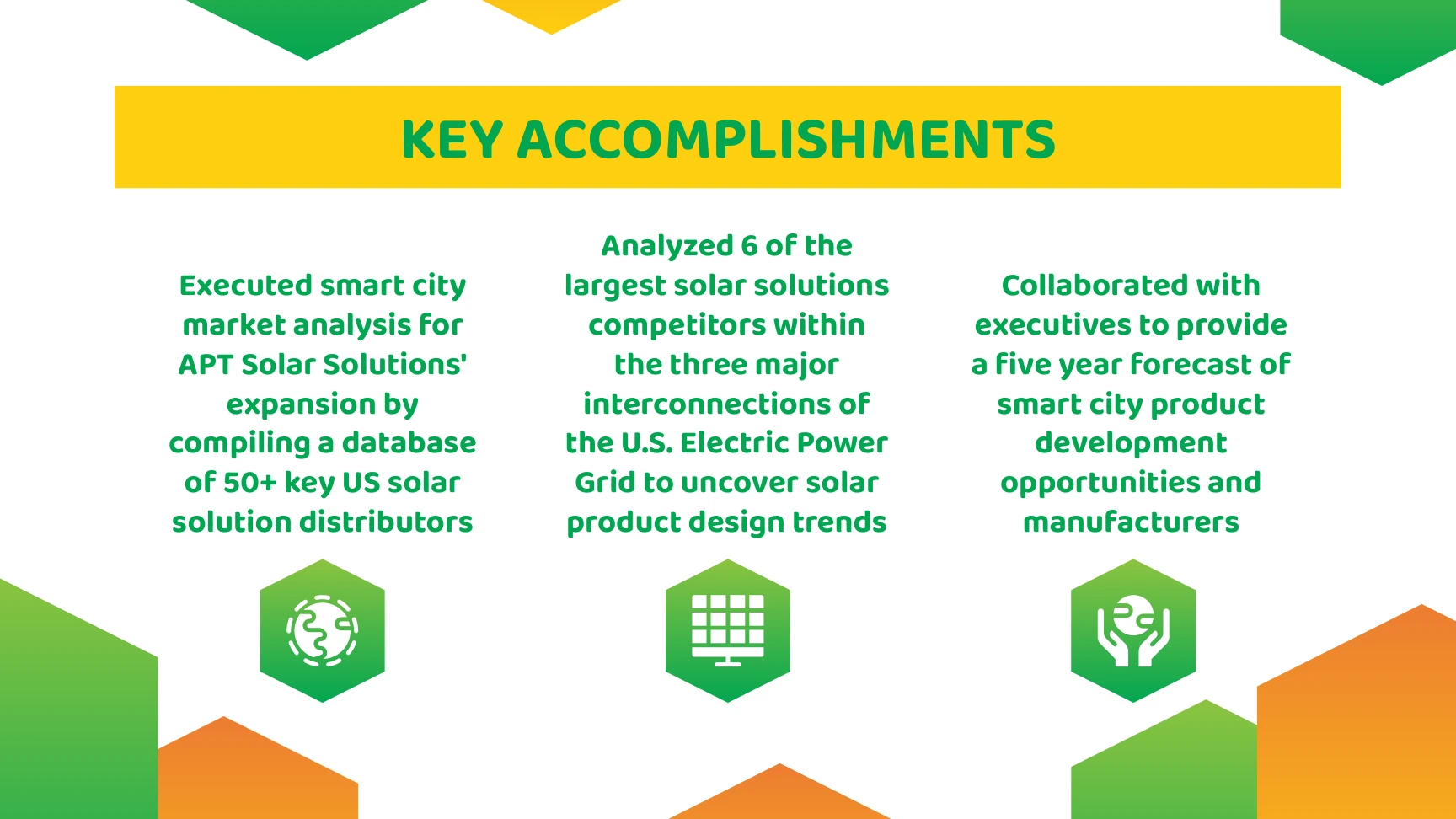
We researched the Northeast, South, West, and Midwest and assembled a database of more than 50 potential solar-solution partners during the internship. We considered their markets, product portfolios, and potential fit with APT’s offering rather than treating every lighting company as an equally useful lead.
In parallel, we reviewed six competitors across the three major U.S. electric-grid interconnections: Greenshine, Solar Path Sun Solutions, Greentech Renewable, Green Frog Systems, Sol by Sunna, and Solar Electric Power Company. This provided a frame for comparing product design trends and market positioning.
Our outreach questions covered customer segments, the features of existing outdoor lighting products, support expectations, and plans for product expansion. We contacted organizations by email, phone, LinkedIn, and inquiry forms, and offered executive follow-up where there was interest.
After the first calls, we adjusted how we introduced the work. Explaining that we were interns researching potential partnerships for a solar-lighting startup made the purpose of the conversation clearer. Follow-up then helped us identify organizations worth a deeper discussion.
The response log captured several different outcomes: an interview, a distributor contact, no response, a refusal to carry outside vendors, or a mismatch with the current product. These were different signals and needed different next steps.
For example, some organizations did not distribute other companies’ products, while another needed larger fixtures. That distinction mattered: additional outreach might improve a conversation, but it would not resolve a product or business-model mismatch.
Our final report connected the research to recommendations: prioritize engaged prospects, personalize outreach, prepare stronger product-information packages, consider sample products, and explore larger lighting options for commercial use.
The final-week deck shows a structured handoff: submit the report, review it with the C-suite, and provide a revised version. I also contributed to discussions about a five-year horizon for product-development opportunities and potential partnerships.
The most useful research output was a clearer relationship between a prospect’s situation and the action APT should take.
| What mattered | The response | Why it mattered |
|---|---|---|
| Interest was uneven across the prospect list. | Prioritize responsive, relevant companies for executive conversations. | Focus follow-up effort where there was evidence of fit. |
| Some distributors could not take outside vendors. | Qualify distribution arrangements before treating a company as a sales opportunity. | Reduce time spent pursuing structurally unsuitable channels. |
| Commercial prospects could require larger fixtures. | Bring sizing requirements into product-development discussions. | Connect expansion planning with the product’s capabilities. |
| Generic outreach did not communicate every prospect’s opportunity. | Tailor messages and product information to the distributor’s market. | Make the proposed partnership easier to evaluate. |
The engagement produced a competitor review, a researched partner database, distributor response records, and an executive-facing final report. My updated résumé records 70+ prospective clients identified by the team and recommendations that informed leadership’s decision to pursue the prospects we identified.
The original presentation records an earlier 50+ partner research milestone; the final report discusses a 45-company outreach list. These are different stages and subsets of the research, rather than three interchangeable measures of signed customers. The work created a better starting point for partnership development; the materials do not establish completed contracts or resulting sales.
This project strengthened my ability to connect technical information with business decisions. A feature can be impressive and still be unsuitable for a particular channel. The research became more useful when we explained that relationship clearly enough for an executive to act on it.
It also showed me the value of treating nonresponses and mismatches as information. A useful handoff explains why a prospect is promising, what remains unknown, and who needs to take the next step.